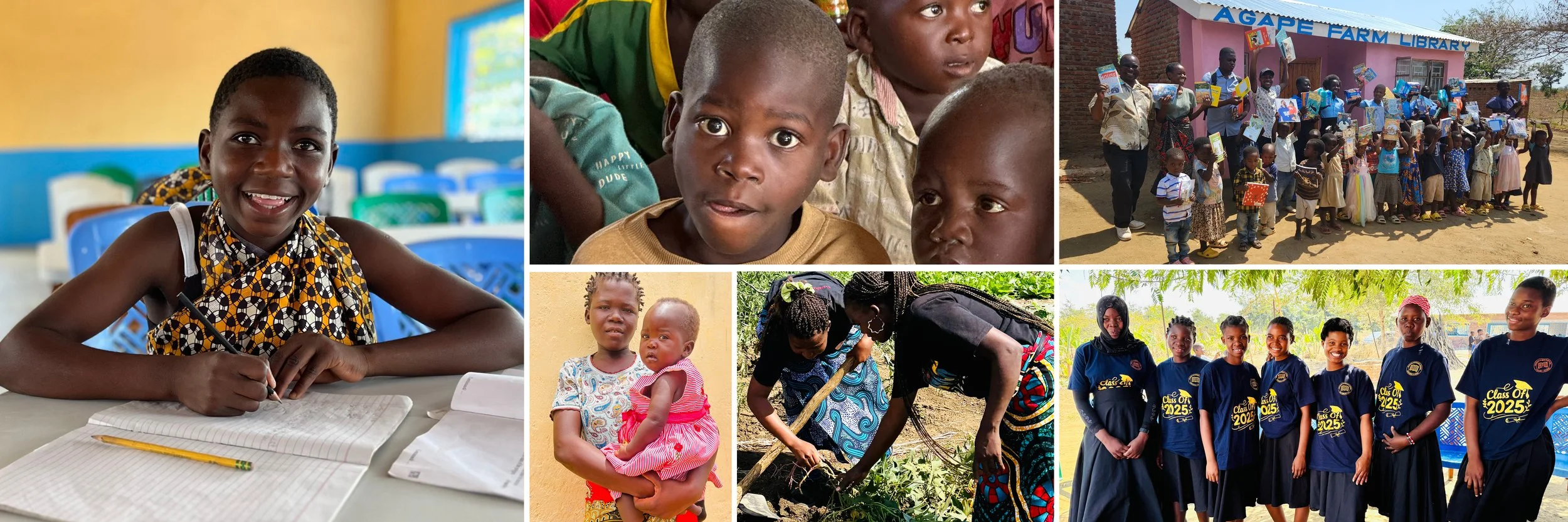

Building
Educating
Empowering
Equipping
AGAPE FARMHANDS
Agape Farmhands is a U.S. - based educational non-profit organization working with and providing funding and management oversight for Agape Farm, located in Malawi, Africa. Started by a small California-based group in January 2022, Agape Farmhands supports Agape Farm by funding programs and food for children and families, capital and agricultural improvements, and salaries for the local Malawi staff. Our mission is to build a prosperous rural community by educating children, empowering girls and women, and equipping men to fully engage with their families.
AGAPE FARM
Founded in 2018 by Francis Matumba, 2018 by Francis Matumba, Agape Farm is a hub for education, skills training, and community development. Located outside of the small city of Salima, Malawi, Agape Farm educates children in its preschool, intensively tutors, feeds, and clothes students in grades 1-12, facilitates women’s and men’s groups where they learn financial literacy and business skills, and operates agriculture and tailoring training centers.
A core part of Agape Farm’s approach is promoting equity; girls receive full access to education and skills training, and all participants engage in meaningful conversations about gender roles and their impact on education, income, health, and relationships. Programs are designed in collaboration with the local community, and the majority of staff are local residents with deep understanding of the culture and context.
ABOUT MALAWI
Malawi is one of the world’s six poorest countries according to the International Monetary Fund. Extreme poverty results in inadequate food, lack of opportunities for girls, and low educational attainment. 40% of young children’s growth is stunted due to under-nutrition; 40% of girls are married by age 18; and 4% of students graduate from high school (UNICEF). Malawi has a high prevalence of HIV (7.7% according to UNAIDS), malaria, and tuberculosis, and lacks running water and electricity. Over 80% of the population lives in rural areas where they grow their own food. The weather-dependent crops are more difficult to sustain as climate change brings more droughts and extreme weather events.